Council of Ministers
Home
>
Council of Ministers
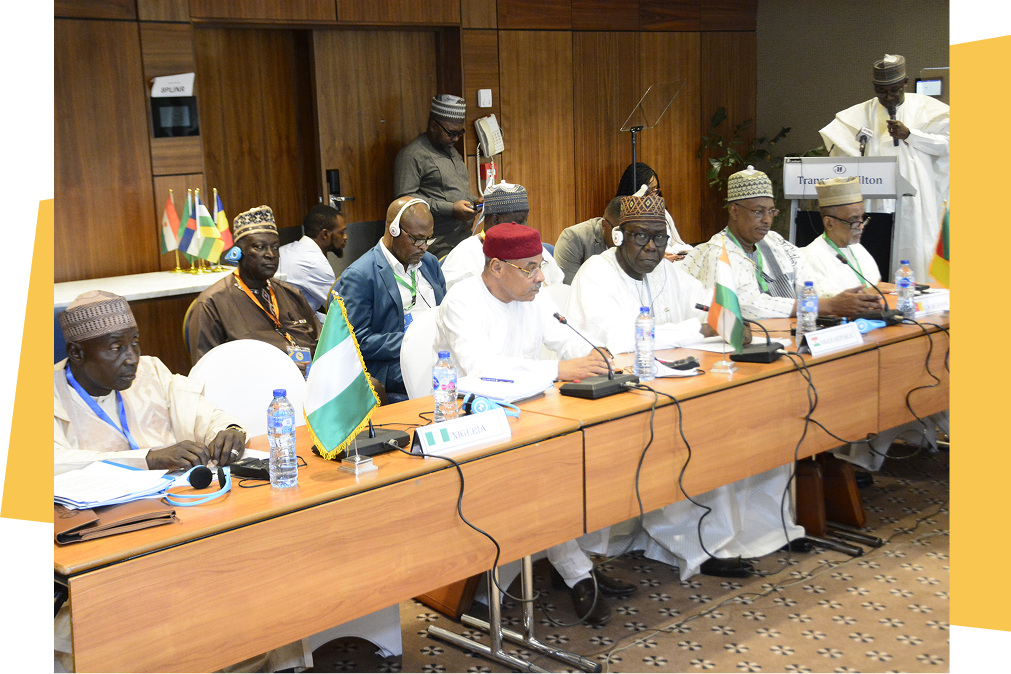
The Council of Ministers of the Lake Chad Basin Commission (LCBC) serves as a vital executive body, translating the strategic vision of the Summit of Heads of State into actionable policies and programs. Composed of dedicated representatives from each Member State, the Council ensures continuity, coordination, and cooperation across the Basin.
Composition and Structure
Each Member State appoints two Commissioners to the Council of Ministers—designated as the First and Second Commissioners. These individuals are typically senior government officials with expertise in water resources, environment, or regional development. Together, they form a collegial body that reflects the diversity and unity of the LCBC membership.
Mandate and Functions
The Council of Ministers is entrusted with the following responsibilities:
Reviewing and approving the annual work program and budget.
Monitoring the implementation
of LCBC projects and initiatives.
Advising the Summit of Heads of State on technical and policy matters.
Facilitating intergovernmental coordination and stakeholder engagement.
The Council plays a critical role in ensuring that the Commission’s activities are aligned with regional priorities and international best practices.
Meetings and Milestones
The Council of Ministers convenes regularly to deliberate on key issues affecting the Lake Chad Basin. To date, it has held 70 sessions, each contributing to the strengthening of regional governance and the advancement of sustainable development goals.
These meetings provide a platform for:
joint programs
Addressing emerging challenges such as
climate change, water scarcity, and security.
Endorsing resolutions and recommendations for the Summit.
Strategic Role
As the operational backbone of the LCBC, the Council of Ministers bridges the gap between high-level political decisions and ground-level implementation. It fosters:
· Technical collaboration among Member States.
· Harmonization of national policies with regional frameworks.
· Capacity building and institutional strengthening.
Looking Ahead
With a legacy of 70 successful sessions, the Council of Ministers continues to evolve as a dynamic force for regional integration and resilience. Its commitment to dialogue, innovation, and shared responsibility remains central to the LCBC’s mission of transforming the Lake Chad Basin into a hub of peace, prosperity, and sustainability.