+235 22 52 40 29

+235 22 52 41 45

info@clbt.org

Integrated Water Resources Managementin the Lake Chad Basin

Integrated Water Resources Management
in the Lake Chad Basin

>

A Cornerstone of Sustainability and Regional Cooperation

Integrated Water Resources Management (IWRM) is at the heart of the Lake Chad Basin Commission’s (LCBC) mission to ensure the sustainable, equitable, and efficient use of water resources across its Member States. As a transboundary basin shared by Cameroon, Chad, Niger, Nigeria, Central African Republic, and Libya, the Lake Chad Basin faces complex challenges that demand coordinated and holistic solutions. IWRM provides the framework to address these challenges while promoting peace, prosperity, and environmental resilience.
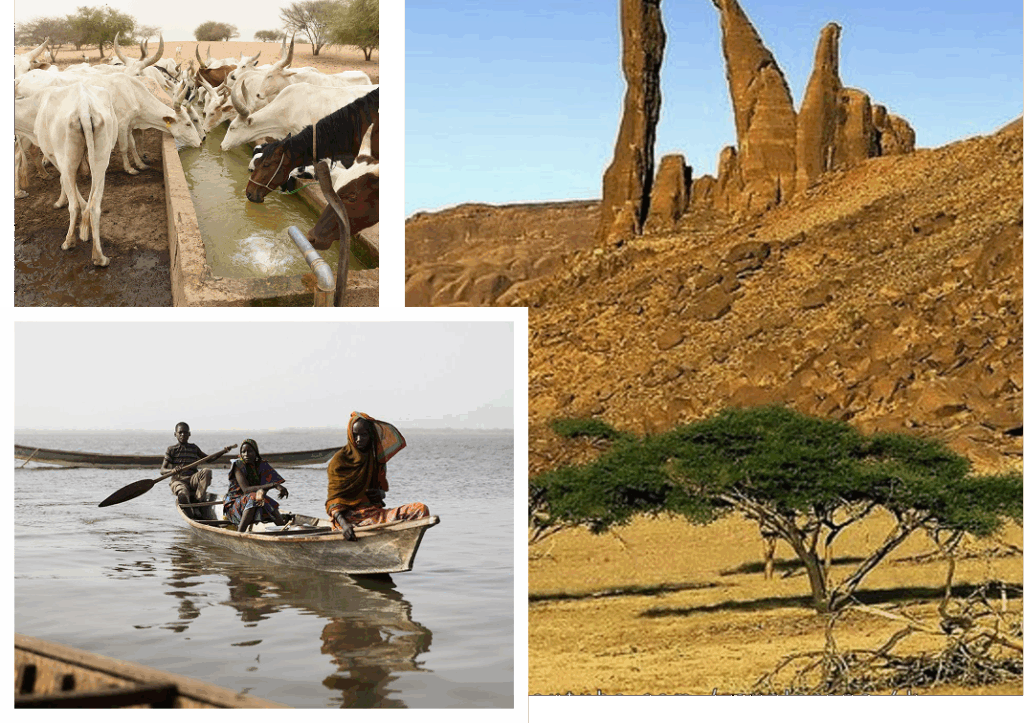
Why IWRM Matters in the Lake Chad Basin

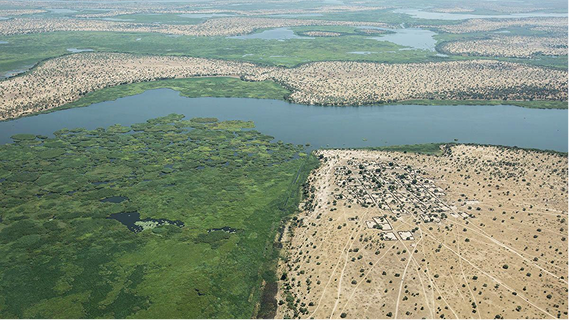
The Lake Chad Basin is one of Africa’s most vulnerable regions to climate variability, water scarcity, and environmental degradation. Over the past decades, Lake Chad has shrunk dramatically, affecting millions of lives and livelihoods. IWRM offers a strategic approach to:

· Balance competing water demands from agriculture, domestic use, industry, and ecosystems.
· Promote cross-border cooperation and conflict prevention.
· Enhance climate resilience and disaster risk reduction.
· Support sustainable development and poverty reduction.

LCBC's Commitment to IWRM

LCBC has embedded IWRM principles in its strategic frameworks, including:

· Vision 2025: A commitment to equitable and sustainable water use.
· Water Charter (2012): Establishes rules for water abstraction, pollution control,
and ecosystem protection.
· Strategic Action Programme (SAP 2023–2037): Aligns IWRM with biodiversity
conservation, climate adaptation, and sedimentation control.
· Transboundary Strategic Framework for Disaster Risk Reduction and Climate Change
Adaptation (DRR/CCA): Integrates water governance into resilience-building efforts.

Key Pillars of IWRM in the Basin

Knowledge and
Monitoring
  • Establishment of hydrometeorological networks.
  • Regular monitoring of surface and groundwater quality.
  • Development of the Lake Chad Basin Information System (LIS).

Water Availability and Infrastructure

  • Promotion of rainwater harvesting and conjunctive use of water sources.
  • Support for inter-basin transfer studies and hydraulic infrastructure.
  • Improved irrigation and flood control systems.

Water Quality and Ecosystem Protection

  • Pollution control from agriculture, industry, and domestic sources.
  • Conservation of wetlands and Ramsar sites.
  • Restoration of degraded ecosystems and biodiversity hotspots.
Governance and
Participation
  • Implementation of the Water Charter and international conventions.
  • Stakeholder engagement through basin-wide forums.
  • Gender mainstreaming and empowerment of vulnerable groups.

Achievements and Innovations

Regional Water Charter

A pioneering legal instrument for transboundary water governance.

Climate Watch Platform

Enhances decision-making through real-time climate data.

Community-Led Sanitation and Water Management

Empowers local actors in sustainable practices.

Integration with Biodiversity and Disaster Risk Strategies

Ensures coherence across sectors.

Looking Ahead

LCBC continues to champion IWRM as a transformative tool for regional integration and sustainability. The implementation of the SAP 2023–2037 and other strategic frameworks will further strengthen water governance, improve livelihoods, and safeguard the Lake Chad Basin’s ecological integrity.

Through innovation, collaboration, and shared responsibility, IWRM remains a beacon of hope for the Lake Chad Basin—a region striving to turn its challenges into opportunities for growth and resilience.

Scroll to Top