Lake Chad Basin Commission

+235 22 52 40 29

+235 22 52 41 45

info@cblt.org

Search Results for: shops

Lake Chad Region Recovery and Development Project – PROLAC – LCBC Project

Lake Chad Region Recovery and Development Project – PROLAC – LCBC Project Overview The Lake Chad Region Recovery and Development Project (PROLAC) is a regional initiative funded by the World Bank through the International Development Association (IDA), aimed at supporting the recovery and resilience of communities in the Lake Chad Basin. The project is implemented by the Lake Chad Basin Commission (LCBC) alongside national governments of Cameroon, Chad, and Niger. Objective To contribute to the recovery of the Lake Chad Region by supporting regional coordination and crisis monitoring, improving connectivity, and strengthening agricultural livelihoods in selected provinces of Cameroon, Chad, and Niger.   LCBC-Executed Component Component 1: Regional Lake Chad Knowledge and Monitoring Platform and Secretariat for the Development of the Lake Chad Region Budget: US$5 million (LCBC share) Objective: To reinforce regional dialogue, data monitoring and dissemination, citizen engagement, and social cohesion through the establishment of a regional knowledge and monitoring platform. Key Activities: Establishment of the LCBC PROLAC Project Implementation Unit (PIU): Coordinates regional dialogue and development vision. Facilitates knowledge creation and dissemination. Organizes learning and monitoring workshops. Development of the Knowledge and Monitoring Platform: Web-hosted platform integrating spatial and temporal datasets. Collaboration with academic and research institutions. Capacity building in data collection and geospatial analysis. Annual International Forum on the Development of the Lake Chad Region: High-level event bringing together stakeholders from member states, development partners, and local authorities. Platform for reporting, harmonizing strategies, and planning new initiatives. Support to the Regional Coordination Committee (RCC): Provides oversight and strategic guidance. Prepares joint action plans and statements. Expected Results: Operational regional knowledge platform. Increased access to development data. Strengthened regional cooperation and policy harmonization. Enhanced capacity of LCBC as a regional coordination body. Cross-Cutting Themes Gender Inclusion: Ensuring 50% participation of women in project activities and decision-making bodies. Youth Engagement: Targeted support for youth through training and employment opportunities. Climate Resilience: Integration of climate-smart practices and data into planning and implementation. Alignment with Strategic Frameworks Regional Strategy for Stabilization, Recovery and Resilience (RSS) World Bank’s Strategy for Fragility, Conflict, and Violence (2020–2025) Country Partnership Frameworks (CPF) for Cameroon, Chad, and Niger Contact Implementing Agency: Lake Chad Basin Commission (LCBC) Location: N’Djamena, Chad Email: PROLAC-CBLT@cblt.org Coordinator: Alio Abdoulaye

Lake Chad Basin Conservation Project (PCBLT)

Lake Chad Basin Conservation Project (PCBLT) Duration: March 2023 – December 2026 Budget: CAD $25 million, + CAD $1.1M of in-kind contribution from Alinea and its consortium partners Financial Partner: Global Affairs Canada (GAC) Implementing Partner: Alinea International Strategic Partner: Lake Chad Basin Commission (LCBC) Consortium Partners: Centre for Forestry Education and Research (CERFO), Centre for Indigenous Environmental Resources (CIER), United Nations Association in Canada (UNAC), Centre for the Promotion of Human Rights and Development in Africa (CPHDA) Community Partners: AGIR Plus- Niger, Alliance Citoyenne pour le Développement et l’Education à l’Environnement (ACEEN-Cameroon) and Organisation Sauvons le Lac Tchad (OSLT-Chad) Introduction The Lake Chad Basin Conservation Project (LCBCP) strengthens the climate resilience of ecosystems and marginalized communities, particularly women and youth, across six Ramsar sites in Cameroon, Chad, and Niger. These regions face ecological degradation, biodiversity loss, hydrological instability, and increasing tensions around the utilization of natural resources. Project Pillars  Wetland Conservation & Climate Adaptation The project promotes the restauration and conservation of wetlands and agropastoral areas by marginalized communities highly vulnerable to climate change, across protected areas of the Lake Chad Basin registered under the Ramsar Convention. Through community-led restoration, climate adaptation practices, and environmental stewardship, the project protects fragile ecosystems while improving community resilience to climate shocks. Women & Youth Economic Empowerment The project supports women and youth in vulnerable agropastoral communities located within and around priority Ramsar sites to adopt and benefit from sustainable, climate-smart agricultural livelihoods. By strengthening adaptive capacities, income-generating activities, and access to productive resources, the project enhances food security, economic resilience, and adaptation to climate change. Environmental Peacebuilding & Leadership The project enhances the leadership of women and youth in environmental peacebuilding around targeted Ramsar sites and within existing regional stabilization processes. By strengthening inclusive governance, dialogue, and community engagement, the project reinforces social cohesion and peace across the Lake Chad Basin and contributes to the Regional Stabilization Strategy of the LCBC and its partners. Objectives The project aims to: Restore degraded ecosystems and strengthen biodiversity. Support the utilization of NbS for climate adaptation and resilience. Promote inclusive and equitable resource governance. Advance gender equality and social inclusion. Support climate-resilient livelihoods for women, youth, and marginalized groups. Strengthen cross-border environmental cooperation. Integrate environmental peacebuilding into regional stabilization processes. Key Activities and Components  Nature-Based Solutions & Ecosystem Restoration Restoring 10,000 hectares of wetlands and agropastoral areas. Promoting climate-smart agriculture and NbS-linked livelihood promotion. Training of 1,500 government and regional-level officials in NbS, resources mobilization, climate adaptation, and biodiversity preservation/monitoring.  Gender Equality & Social Inclusion Increasing women and youth participation in conservation and governance. Improving equitable access to natural resources, including land. Engaging men and boys as allies in gender-responsive climate action. Expanding gender-transformative initiatives that improve equity in decision-making, resource access, and leadership at both household and community levels.   Income-Generating Activities (IGAs) Supporting women-led and youth-led IGAs linked to NbS (agroforestry, sustainable fisheries, seed production, restoration services). Providing microgrants to community associations, cooperatives and small-scale producers. Offering coaching in green entrepreneurship, market development, and sustainable value chains. Promoting climate-resilient IGAs that support conservation and household income.   Community Governance & Environmental Peacebuilding Strengthening local and transboundary governance structures. Facilitating dialogue on natural resource use and developing natural resource management strategies at the community level. Providing technical assistance and training on environmental peacebuilding and monitoring and evaluation of stabilisation efforts   Zones of Intervention (Ramsar Wetlands Sites) Chad Lac Fitri Logone Floodplains & Toupouri Depressions Bahr Aouk & Salamat Floodplains Cameroon Waza Logone Floodplains  Niger Lac de Guidimouni Mare de Lasouri Expected Achievements and Impact The project aims to strengthen the climate resilience of ecosystems and marginalized communities, particularly women and youth, across the Lake Chad Basin through NbS. Its expected quantitative results are listed below: 10,000 hectares of wetland/agropastoral areas restored. 1,500 government and LCBC officials trained (30% women). 3,000 Gender Model Families sensitized and trained. 315,000 direct beneficiaries, including 75% women. Over 2 million people benefiting from improved ecosystem services. 2.7 million displaced persons indirectly benefiting from environmental peacebuilding integration.   Key Achievements   NB: As of October 2025 Restauration Mapping and public dissemination of ecological and socio-economic restoration sites completed, enabling coordinated planning and action among stakeholders. Tree-planting missions conducted in degraded forest, wetland, and agro-pastoral landscapes, with strong community participation. Labour-Intensive (HIMO) approach introduced to restore degraded wetlands and agro-pastoral lands, creating local green jobs and promoting inclusive restoration work. Restoration tools, equipment, plants, and seeds provided to local communities. Training of hundreds of community members in seed collection, nursery establishment, tree-planting, restoration techniques delivered Workshops on NbS financing offered to national government and regional officials. Multinational workshops on biodiversity monitoring systems, involving specialists from Chad, Cameroon, Niger, and partner countries, hosted. Coordination missions with technical services in forestry, agriculture, and environmental management implemented to strengthen institutional collaboration. Income-Generating Activities: 31 micro-grants (value of 4 million CFA each) offered to support innovative IGAs in wetlands, climate-smart agriculture, agro-pastoral production, and women-led green enterprises. Capacity-building missions conducted to strengthen micro-grant recipient groups in management, financial literacy, and sustainability. Women’s groups knowledge and network empowered thought their participation in national platforms exhibitions and forums. Training delivered on (micro)business development and management to community groups, associations and cooperatives. Women and youth integrated into field-based activities, including restoration work, nursery development, and IGA expansion.   Gender Equality: Development of the first National Action Plan for Women’s Land Rights in Chad, a landmark policy achievement integrating gender equality into land governance and national restoration priorities, and a Regional Action Plans on Women’s Land Rights also developed and adopted in Cameroon, strengthening regional alignment and multi-country commitment to gender-responsive land governance. Rollout of the GMF approach with civil society partners, including mentor training, community sensitization, and development of household-level gender action plans. Strengthened gender-responsive programming, with women and youth increasingly participating in natural-resource governance, restoration committees, and community dialogues. Introduction and expansion of the masculine leaders’ approach, engaging influential men and male youth as allies in gender equality, supporting household transformation, and promoting positive masculinities in
PROLAC Project – Lake Chad Region Recovery and Development Project

PROLAC Project – Lake Chad Region Recovery and Development Project Home > PROLAC Project – Lake Chad Region Recovery and Development Project Overview The Lake Chad Region Recovery and Development Project (PROLAC) is a regional initiative funded by the World Bank through the International Development Association (IDA), aimed at supporting the recovery and resilience of communities in the Lake Chad Basin. The project is implemented by the Lake Chad Basin Commission (LCBC) alongside national governments of Cameroon, Chad, and Niger. Objective To contribute to the recovery of the Lake Chad Region by supporting regional coordination and crisis monitoring, improving connectivity, and strengthening agricultural livelihoods in selected provinces of Cameroon, Chad, and Niger. LCBC-Executed Components Component: Regional Lake Chad Knowledge and Monitoring Platform and Secretariat for the Development of the Lake Chad Region Budget: US$5 million (LCBC share) Objective: To reinforce regional dialogue, data monitoring and dissemination, citizen engagement, and social cohesion through the establishment of a regional knowledge and monitoring platform. Key Activities Establishment of the LCBC PROLAC (PIU) Coordinates regional dialogue and development vision. Facilitates knowledge creation and dissemination. Organizes learning and monitoring workshops. Development of the Knowledge Monitoring Platform Web-hosted platform integrating spatial and temporal datasets. Collaboration with academic and research institutions. Capacity building in data collection and geospatial analysis. Annual International Forum on the Development of the Lake Chad Region High-level event bringing together stakeholders from member states, development partners, and local authorities. Platform for reporting, harmonizing strategies & planning new initiatives. Support to the Regional Coordination Committee Provides oversight and strategic guidance. Prepares joint action plans and statements. Expected Results Operational regional knowledge platform. Increased access to development data. Strengthened regional cooperation and policy harmonization. Enhanced capacity of LCBC as a regional coordination body. Cross-Cutting Themes · Gender Inclusion: Ensuring 50% participation of women in project activities and decision-making bodies.· Youth Engagement: Targeted support for youth through training and employment opportunities.· Climate Resilience: Integration of climate-smart practices and data into planning & implementation. Alignment with Strategic Frameworks · Regional Strategy for Stabilization, Recovery and Resilience (RSS)· World Bank’s Strategy for Fragility, Conflict, and Violence (2020–2025)· Country Partnership Frameworks (CPF) for Cameroon, Chad, and Niger Contact Implementing AgencyLake Chad Basin Commission (LCBC) PartnersUNDP, GEF WebsiteLCBC Project Page

Sustainable Water Resources Managementin the Lake Chad Basin (GIZ)

Sustainable Water Resources Management in the Lake Chad Basin (GIZ) Home > Sustainable Water Resources Management in the Lake Chad Basin (GIZ) Overview This module is part of the broader German development cooperation programme “Sustainable Water Resources Management in the Lake Chad Basin,” implemented by GIZ in collaboration with the German Federal Institute for Geosciences and Natural Resources (BGR). The project supports the Lake Chad Basin Commission (LCBC) in strengthening its institutional and organizational capacities to fulfill its mandate effectively. Objective To support LCBC in its organizational development and enhance its planning, cooperation, and communication capacities for improved performance and sustainable water resource management. LCBC-Executed Components Component: Institutional Strengthening & Technical Advisory Support to LCBC Duration: July 2011 – June 2017 Funding Partners: German Federal Ministry for Economic Cooperation and Development (BMZ) Key Activities Organizational Reform Support Assist LCBC in restructuring its internal systems and governance. Develop strategic planning tools and frameworks. Capacity Building Train LCBC staff in planning, coordination, and communication. Facilitate workshops and technical exchanges with other regional commissions. Communication Enhancement Improve internal and external communication systems. Support the development of media products and publications. Donor Coordination Strengthen LCBC’s ability to coordinate with international partners. Promote efficient use of resources through harmonized planning. Monitoring & Evaluation Systems Establish M&E frameworks for LCBC programmes. Develop regional databases and information systems. Expected Results · Harmonized legal and policy frameworks.· Strengthened institutional & stakeholder capacity.· Operational data systems for basin management.· Validated ecosystem and livelihood interventions.· Investment roadmap for SAP implementation. Cross-Cutting Themes · Climate Change Adaptation: Resilient water and land use.· Biodiversity Protection: Conservation of ecosystems and species.· Sustainable Livelihoods: Community-based economic alternatives. Alignment with Strategic Frameworks · Lake Chad Basin Strategic Action Programme (SAP)· Lake Chad Basin Water Charter· UNDP-GEF International Waters Goals Contact Contact Implementing AgencyLake Chad Basin Commission (LCBC) PartnersUNDP, GEF WebsiteLCBC Project Page

Sustainable Management of the WaterResources of the Lake Chad Basin (BGR)

Sustainable Management of the Water Resources of the Lake Chad Basin (BGR) Home > Sustainable Management of the Water Resources of the Lake Chad Basin (BGR) Overview This module is part of the broader technical cooperation between the Lake Chad Basin Commission (LCBC) and the Federal Institute for Geosciences and Natural Resources (BGR), funded by the German Federal Ministry for Economic Cooperation and Development (BMZ). The project supports LCBC in strengthening its competencies for transboundary groundwater resource management in the Lake Chad Basin. Objective To achieve climate-resilient, integrated ecosystem-based management of the Lake Chad Basin through policy, legal, and institutional reforms, and investments that improve water quality and quantity, protect biodiversity, and sustain livelihoods. LCBC-Executed Components Component: Groundwater Management Advisory and Capacity Building Duration: July 2011 – June 2018 Budget: €4 million Funding Partner: BMZ (Germany) Key Activities Technical Advisory Services Support LCBC in developing groundwater management strategies. Facilitate regional consultation and policy alignment. Capacity Development Train LCBC staff and member state experts in hydrogeology and groundwater monitoring. Conduct workshops and technical exchanges. Data Collection & Analysis Improve groundwater data systems and monitoring networks. Support aquifer mapping and vulnerability assessments. Stakeholder Engagement: Stakeholder Engagement Promote dialogue among member states on groundwater governance. Develop communication tools for public awareness. Expected Results · Harmonized legal and policy frameworks.· Strengthened institutional & stakeholder capacity.· Operational data systems for basin management.· Validated ecosystem and livelihood interventions.· Investment roadmap for SAP implementation. Cross-Cutting Themes · Climate Change Adaptation: Resilient water and land use.· Biodiversity Protection: Conservation of ecosystems and species.· Sustainable Livelihoods: Community-based economic alternatives. Alignment with Strategic Frameworks · Lake Chad Basin Strategic Action Programme (SAP)· Lake Chad Basin Water Charter· UNDP-GEF International Waters Goals Contact Contact Implementing AgencyLake Chad Basin Commission (LCBC) PartnersUNDP, GEF WebsiteLCBC Project Page

News & Press Releases

A Delegation of NISS visits LCBC

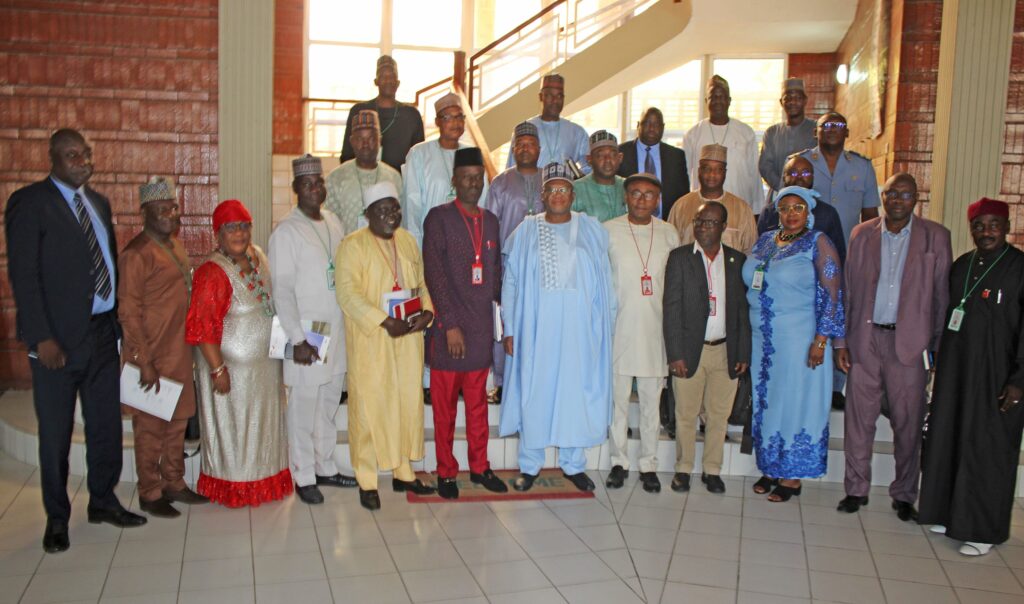
On Wednesday, 21 June 2023, the Executive Secretary of the Lake Chad Basin Commission (LCBC) and Head of Mission of the Multinational Joint Task Force (MNJTF), Ambassador MAMMAN NUHU, received a delegation from the National Institute for Security Studies (NISS), on a study trip to Chad. Mr OMOAKA Bartholomew led the delegation to LCBC. It comprised some of the institution’s teaching staff, participants in the Institute’s Course 16 on intelligence management for executives. They include trainees from other public institutions such as the armed forces, foreign affairs, the police, and public administration. This visit by the NISS is part of an extensive study tour programme aimed at familiarising participants with globalisation issues linked to regional integration and sustainable development in their countries and how these dynamics are managed. In his introductory remarks, the head of the delegation commended the Lake Chad Basin Commission for agreeing to host the participants and talk to them about “Globalisation and regional economic integration: implications for sustainable development in Africa,” a topical issue for the Lake Chad Basin region and its Member States. He presented the NISS as a high-level institution whose main objective is to serve as a framework of political reflection of excellence for the training of high-flying technocrats of great intellectual capacity, capable of developing and implementing innovative and dynamic political initiatives and strategies essential for development. Mr OMOAKA Bartholomew also pointed out the importance of such educational visits like this study tour – together with the organisation of courses for high-level decision-makers and political administrators, research on social and public policies, seminars and workshops, brainstorming sessions, the dissemination of reports and thematic papers. They are forums par excellence where academics, seasoned policymakers, and other seasoned professionals from all occupations meet to discuss and exchange ideas on major societal issues, particularly as they relate to Nigeria and Africa. As evidence of this, he noted that during his two-week stay, he would be visiting institutions such as the Ministry of the Armed Forces, the Ministry of Foreign Affairs, the Ministry of Economic Prospective, the Ministry of Historical Heritage and Tourism, the Ministry of Communication, as well as the National School of Administration, to be abreast and learn more from these institutions about issues relating to their theme. In response to this request, Ambassador MAMMAN NUHU expressed his delight at welcoming the delegation, comprised of a wide range of personalities from different key areas, all of whom are future ambassadors of LCBC to their respective institutions. Concerning the theme of the visit, “Globalisation and regional economic integration,” the Executive Secretary began by paying a well-deserved tribute to the founding fathers of LCBC, who, in the aftermath of independence, had the foresight and wisdom to set up an organisation such as LCBC, whose mandate and mission are still relevant and topical today. The MNJTF Head of Mission developed his understanding of the theme of the mission for a regional organisation responsible for managing water and other environmental resources in the Lake Chad Basin, promoting peace and security and regional integration, particularly in terms of challenges, weaknesses, threats, and opportunities. The ceremony was attended by directors, heads of divisions and project and programme coordinators of LCBC and ended with an exchange of gifts and a group photo.

Scroll to Top