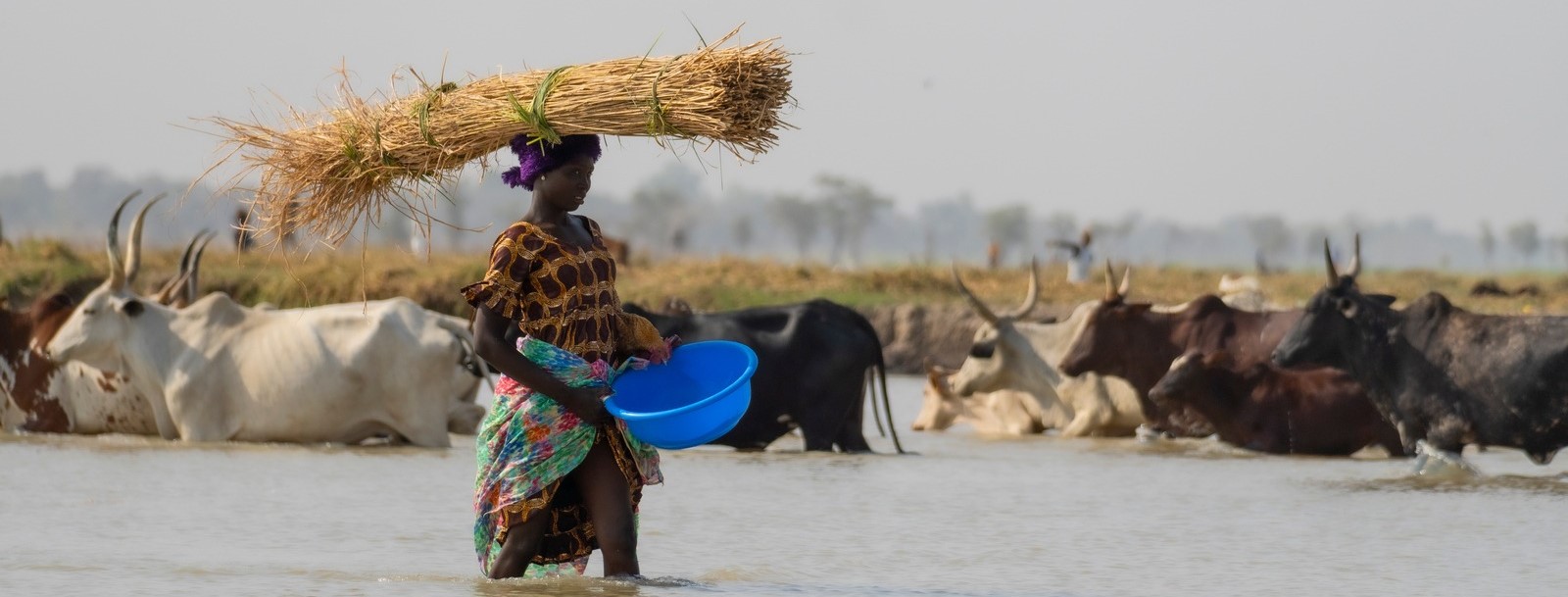
• Regional Lake Chad Water Management Project (LACHAWAMA)

    Regional Lake Chad Water Management Project (LACHAWAMA) The Lake Chad Basin Commission (LCBC), in partnership with Deutsche Gesellschaft für Internationale Zusammenarbeit (GIZ) GmbH, the French Development Agency (AFD) and with financial support from the European Union (EU) and the German Federal Ministry for Economic Cooperation and Development (BMZ), is implementing the Regional Lake Chad Water Management Project (LACHAWAMA). Implemented within the framework of the Team Europe Initiative on Transboundary Water Management, the project reflects a shared commitment to strengthening cooperation, enhancing resilience, and promoting sustainable development across the Lake Chad Basin.   A Basin Under Pressure The Lake Chad Basin covers approximately 2.4 million km² and is home to more than 50 million people, a population expected to double within the next 25 years. The basin spans six countries Chad, Nigeria, Niger, Cameroon, the Central African Republic, and Libya and supports livelihoods largely dependent on water resources, including agriculture, livestock, and fisheries. However, the region faces multiple and interconnected challenges: Climate variability and environmental degradation Shrinking water resources and changing rainfall patterns Recurrent floods and droughts Rapid population growth and increasing competition over natural resources Insecurity and population displacement These pressures significantly affect ecosystems, economic activities, and social cohesion, making sustainable water management a critical priority for regional stability and development.   LACHAWAMA: A Coordinated Regional Response The LACHAWAMA project (2026–2028) builds on previous initiatives and aims to strengthen transboundary water management through an integrated and multi-level approach. With a budget of €11.25 million, the project supports institutional capacity development while promoting Integrated Water Resources Management (IWRM) across the basin. The overall objective of the project is to strengthen the capacities of regional, national, and local institutions to implement water management approaches that are: Climate-resilient Gender-responsive Conflict-sensitive By addressing both governance and operational challenges, LACHAWAMA contributes to the implementation of the LCBC Strategic Action Plan (2023–2027) and supports long-term efforts to restore ecosystems and improve livelihoods in the basin.   An Integrated Multi-Level Approach A defining feature of the LACHAWAMA project is its three-level implementation strategy, designed to ensure coordinated and effective action across governance levels. Central Level: Strengthening Regional Governance At the level of the LCBC Executive Secretariat, the project supports the development and operationalization of key governance and decision-making tools, including: Inclusive platforms such as the Partners’ Forum Strengthened technical bodies, including the Committee on Environment, Science and Planning (CESP) The development of the Lake Chad Information System (LIS) to improve data collection, sharing, and use These actions enhance coordination among stakeholders and support evidence-based decision-making for sustainable water management.   Regional Level: Promoting Transboundary Dialogue At the level of transboundary sub-basins such as the Komadougou-Yobe, Chari-Logone, and Lake Chad systems the project establishes multi-stakeholder partner platforms. These platforms: Facilitate dialogue among countries and sectors Enable joint identification of water, climate, and conflict-related challenges Support the co-development of coordinated and locally adapted solutions This approach strengthens transboundary cooperation, trust, and inclusive governance across the basin.   Local Level: Building Resilience and Preventing Conflict At the community level, LACHAWAMA promotes practical and integrated solutions aimed at: Strengthening climate resilience Improving sustainable natural resource management Preventing and mitigating conflicts related to access and use of water and land Interventions include capacity building, pilot initiatives, dissemination of best practices, and scaling up successful approaches tailored to local contexts.   Key Areas of Intervention Across these levels, the project focuses on several priority areas: Institutional strengthening and governance improvement Enhancement of water information systems and hydrological monitoring Flood risk prevention and improved preparedness Promotion of nature-based solutions and ecosystem restoration These interventions contribute to improved planning, increased resilience to climate risks, and better protection of vulnerable populations.   Strong Partnerships for Greater Impact LACHAWAMA is implemented through a collaborative framework involving: The Lake Chad Basin Commission (LCBC) The European Union (EU) under the Team Europe Initiative GIZ as the implementing agency Development partners such as the French Development Agency (AFD) National institutions, local authorities, civil society organizations, and communities This coordinated approach ensures complementarity with other regional initiatives, particularly in areas such as flood risk management, hydrological monitoring, infrastructure development, and ecosystem protection.   Towards a Resilient and Sustainable Lake Chad Basin By combining strengthened governance, improved data systems, technical innovation, and community-based solutions, the LACHAWAMA project contributes to a shared vision of a: Resilient Peaceful Environmentally sustainable Lake Chad Basin. Through enhanced cooperation among member states and partners, the project aims not only to improve water resource management but also to address the underlying drivers of fragility and support long-term regional stability and prosperity.  
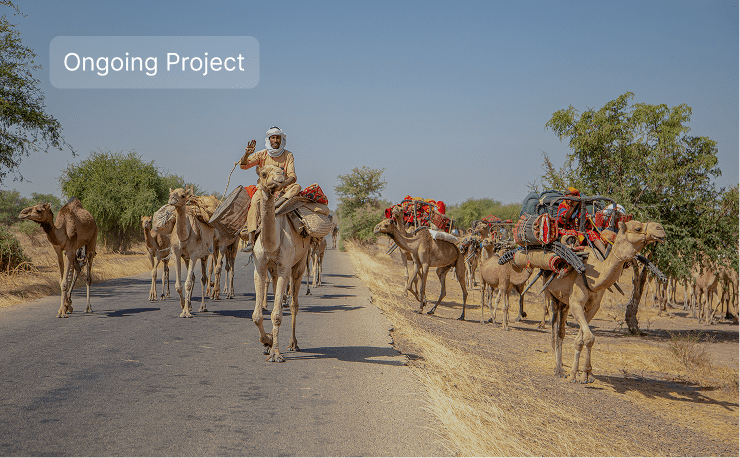
  • Preservation of Lake Chad: Contribution to the Lake Development Strategy (FFEM-AFD)

    Overview This regional project is implemented by the Lake Chad Basin Commission (LCBC) with support from UNDP and funding from the Global Environment Facility (GEF). It aims to build climate resilience and reduce ecosystem stress in the Lake Chad Basin through the implementation of the Strategic Action Programme (SAP), benefiting Cameroon, Central African Republic, Chad, Niger, and Nigeria.     Objective To achieve climate-resilient, integrated ecosystem-based management of the Lake Chad Basin through policy, legal, and institutional reforms, and investments that improve water quality and quantityprotect biodiversity, and sustain livelihoods.

  • The Regional Stabilization Facility for Lake Chad

    Overview The Regional Stabilization Facility (RSF) for Lake Chad is a multi-country, multi-partner initiative developed by the United Nations Development Programme (UNDP) in collaboration with the Lake Chad Basin Commission (LCBC). It supports the implementation of the Regional Strategy for Stabilization, Recovery and Resilience (RSS) in areas affected by Boko Haram across Cameroon, Chad, Niger, and Nigeria. Objective To stabilize Boko Haram-affected areas in the Lake Chad Basin through rapid, flexible, and coordinated interventions that restore security, rebuild infrastructure, and promote livelihoods

  • Implementation of Regional Stabilization Strategy

    Overview The Regional Stabilization Strategy (RSS) is a comprehensive framework adopted by the Lake Chad Basin Commission (LCBC) in August 2018 to address the root causes of instability and violent extremism in the Lake Chad Basin. Endorsed by the African Union Peace and Security Council, the strategy is being implemented across eight targeted territories in Cameroon, Chad, Niger, and Nigeria. Objective To stabilize Boko Haram-affected areas in the Lake Chad Basin through coordinated regional interventions that promote peace, recovery, and resilience. LCBC-Executed Components Component: Coordination and Implementation of the RSS Duration: Ongoing since 2018 Objective: African Union, UNDP, Member States, International Donors Key Activities Technical Coordination of Pillars Coordinate nine strategic pillars of intervention: Political Cooperation Security and Human Rights Disarmament, Demobilisation, Rehabilitation, Reinsertion and Reintegration (DDRRR) Humanitarian Assistance Governance and the Social Contract Socio-Economic Recovery and Environmental Sustainability Education, Learning and Skills Prevention of Violent Extremism and Peace building Empowerment and Inclusion of Women and Youth

  • Sustainable Management of Water Resources in the Lake Chad Basin– Applied

    Overview This project, implemented by GIZ and commissioned by the German Federal Ministry for Economic Cooperation and Development (BMZ), supports the Lake Chad Basin Commission (LCBC) in sustainably managing transboundary water resources. It builds on the achievements of the first phase (2019–2022) and continues through December 2025.   Objective To strengthen LCBC’s capacity to advise member countries on environmentally friendly, climate-adapted, gender-sensitive, and conflict-reducing management of shared water resources in the Lake Chad Basin.

  • Investment Planning for the Sustainable and Equitable Development of the Lake Chad Basin’s Natural Resources (PIBALT)

    Investment Planning for the Sustainable and Equitable Development of the Lake Chad Basin’s Natural Resources (PIBALT) Background The Lake Chad Basin, 2.5 million km² in size, is a living space for nearly 45 million people, including 2 million living around the lake. The ecosystem is under strong pressure due to: the effects of climate change; hydrological variability; the degradation of biodiversity; the rapid increase in population; socio-economic fragilities exacerbated by insecurity (Boko Haram and ISWAP). In order to respond to these challenges, the Lake Chad Basin Commission (LCBC) has adopted a New Strategic Action Programme (SAP 2023-2037), requiring a Five-Year Investment Plan (FYIP) to structure priority actions.   Overall objective Rebuild the economy of the Lake Chad Basin through sustainable, efficient and equitable exploitation of natural resources, through the development of a five-year Investment Plan based on SAP (2023-2037).   Specific objectives Assess the impact of the first Five-Year Investment Plan (FYIP 2013-2017). Identify and prioritize investment actions aligned with the environmental objectives (EQO) of SAP (2023-2037). Strengthen the capacities of regional and national institutions. Mobilize technical and financial partners for the financing of Lake Chad Basin projects.   Expected results Short-term (during the project) Full impact assessment of the 1st FYIP. Development of a 2nd Five-Year Investment Plan including at least 20 bankable project sheets. Organization of a validation workshop and an investor round table. Medium term Improved governance of water and natural resources. Strengthening the climate resilience of communities in the basin. Capacity building of the LCBC and Member States.   Beneficiaries Direct Lake Chad Basin Commission (LCBC) National Water and Environmental Management Institutions Institutional actors from the 5 countries of the conventional basin: Cameroon, Chad, Niger, Nigeria, CAR. Indirect The 45 million inhabitants of the basin and the 2 million living around the lake. Women, youth and vulnerable groups, whose livelihoods depend on natural resources.   Project components Component I: Development of the 2nd Five Years Investment Plan   Evaluation of the 1st FYIP (2009–2018) Identification of sectoral investment opportunities Agriculture Ageing Fishing Energy Trade and navigation Development of at least 20 project sheets aligned with SAP EQOs Development of the 2024 - 2029 Investment Plan Climate risk assessment and development of a resilience plan Support for the organization of the donors' round table   Component II: Project Management (LCBC) Administrative functioning, coordination, monitoring and evaluation, audit.

  • Preservation of Lake Chad: Contribution to the Lake Development Strategy (FFEM-AFD)

      Overview This regional project is implemented by the Lake Chad Basin Commission (LCBC) with support from UNDP and funding from the Global Environment Facility (GEF). It aims to build climate resilience and reduce ecosystem stress in the Lake Chad Basin through the implementation of the Strategic Action Programme (SAP), benefiting Cameroon, Central African Republic, Chad, Niger, and Nigeria. Objective To support the preservation and sustainable development of Lake Chad through integrated water resource management, biodiversity protection, and regional cooperation.