Lake Chad Basin Commission

+235 22 52 40 29

+235 22 52 41 45

info@cblt.org

News & Press Releases

News & Press Releases

Regional Training on Transitional Justice Opens in Douala to Advance Peace and Justice in the Lake Chad Basin

Regional Training on Transitional Justice Opens in Douala to Advance Peace and Justice in the Lake Chad Basin Douala, Cameroon – 29 June 2026 The Lake Chad Basin Commission (LCBC), in collaboration with the African Union Commission (AUC) and supported by key partners including UNDP, has launched a Regional Training on Transitional Justice in Douala, Cameroon. The three-day workshop brings together justice sector actors, policymakers, practitioners and experts from Cameroon, Chad, Niger, and Nigeria to strengthen regional efforts toward peace, accountability, and social cohesion. The opening ceremony was marked by high-level speeches and remarks from representatives of the Host Country Cameroun, the African Union, the United Nations Development Fund (UNDP) and the LCBC, reflecting a shared commitment to addressing the complex legacy of conflict affecting the Lake Chad Region. In his opening remarks, the Executive Secretary of the LCBC ably represented by the Technical Director, emphasized the urgency of addressing the long-term consequences of conflict in the region. He noted that while the Lake Chad Basin continues to face challenges such as insecurity, displacement, and social fragmentation, there is also renewed hope for healing and recovery through coordinated regional action. The training underscores the importance of transitional justice as a key pillar of stabilization. Rather than focusing solely on past violations, transitional justice is positioned as a forward-looking framework that promotes accountability, restores dignity to victims, rebuilds trust in institutions, and fosters reconciliation across communities. This training is part of ongoing efforts by the LCBC and its partners to operationalize the Regional Strategy for the Stabilization, Recovery and Resilience (RS-SRR 2.0), which recognizes transitional justice as essential for sustainable peace. The RS-SRR2.0 emphasizes a humanitarian–development–peace nexus approach, linking security interventions with long-term recovery and governance reforms to address the root causes of instability. Participants will deepen their understanding of transitional justice principles aligned with the African Union Transitional Justice Policy, while ensuring that these approaches remain grounded in the realities of the Lake Chad Basin. The Lake Chad Basin faces interconnected challenges that underscore the need for a comprehensive approach to justice and peacebuilding. These include: These factors have contributed to widespread displacement, socio-economic vulnerabilities, and erosion of trust between communities and state institutions. Against this backdrop, transitional justice provides a framework for addressing grievances, promoting inclusion, and preventing the recurrence of violence by placing the victims and communities at the center of the process. Building Capacity and Ownership With over 40 participants drawn from justice institutions, government agencies, and regional organizations, the training aims to: The interactive training methodology includes expert presentations, case studies, and group discussions designed to translate policy principles into practical actions. The LCBC expressed appreciation to its partners, including the African Union, UNDP, UNODC, IOM, BICC, ISS, and other technical and financial contributors, for their continued support in advancing peace and stability in the region. UNDP, in its remarks, reaffirmed its commitment to supporting transitional justice as a complementary mechanism that strengthens accountability, promotes inclusion, and ensures that recovery processes leave no one behind. The Role of the LCBC in Regional Stability Established in 1964, the Lake Chad Basin Commission plays a central role in promoting regional cooperation, sustainable resource management, and peace and security across its Member States. Through initiatives such as the Strategic Action Programme (SAP 2023–2037) and RS-SRR2.0, the Commission continues to drive efforts aimed at improving livelihoods, strengthening resilience, and fostering long-term stability in one of Africa’s most complex regions.   Over the next three days, participants will engage in in-depth discussions on key thematic areas, including accountability mechanisms, gender and inclusion, psychosocial support, and community-based justice systems. The outcomes of the training are expected to contribute significantly to shaping a coherent, context-specific transitional justice policy for the Lake Chad Basin. As the region continues its journey from crisis to recovery, this training marks an important milestone in building a shared vision for justice, reconciliation, and sustainable peace.  Follow LCBC on X (Twitter): @lcbc_cblt

News & Press Releases

LCBC Launches PARFEBALT Project to Restore Lake Chad Basin Ecosystems and Livelihoods

LCBC Launches PARFEBALT Project to Restore Lake Chad Basin Ecosystems and Livelihoods N’Djamena, Chad – 4 May 2026 The Lake Chad Basin Commission (LCBC), in partnership with the African Development Bank (AfDB), has officially launched the Project to Support the Restoration of the Ecological and Economic Functions of the Lake Chad Basin (PARFEBALT) in N’Djamena, Chad. The five-day workshop (4–8 May 2026) brings together key stakeholders from LCBC Member States, technical and financial partners, and regional institutions, marking a critical milestone in efforts to revitalize the Lake Chad Basin. The opening ceremony was chaired by the Honourable Minister of Water and Energy of Chad, the Executive Secretary of the LCBC, representatives of the African Development Bank, the African Union, and other distinguished partners. A Strategic Project for a Fragile Ecosystem The Lake Chad Basin is one of Africa’s most important transboundary ecosystems, supporting the livelihoods of over 45 million people across Cameroon, Chad, Niger, Nigeria, and the Central African Republic. However, the basin has faced decades of environmental degradation driven by climate change, reduced water inflows, and growing pressure on natural resources. In response to these challenges, PARFEBALT has been designed as a regional technical support initiative to build the foundations for large-scale restoration of the basin’s ecological and economic functions, while strengthening the resilience of its populations. The project, financed by the African Development Bank to the tune of UA 7 million, will focus on enhancing knowledge of water resources, improving governance, and mobilizing investments for long-term revitalization efforts. Official Launch and Key Messages In his opening remarks, the Executive Secretary of the LCBC Amb. Ibrahim Babani emphasized the significance of the initiative, stating: “The launch today represents a decisive step in affirming the shared, united, and visionary commitment of Member States of the LCBC to safeguard Lake Chad and its sustainable development.” He further highlighted the urgency of action in the basin: “The Lake Chad Basin… continues to face challenges of considerable magnitude, including climate variability and change, the gradual degradation of ecosystems, and increased pressure on natural resources.” According to the Executive Secretary, PARFEBALT will play a critical role in strengthening technical capacity, improving monitoring systems, and mobilizing resources for large-scale regional investments, particularly for improving the hydraulic capacity of the Chari–Logone and Komadugu-Yobe river systems. Objectives of the Kickoff Workshop The Kickoff Workshop serves as the official starting point for the implementation of PARFEBALT and aims to: The workshop will also include training sessions on project management procedures and a field visit to highlight key environmental challenges in the basin. Building Foundations for Long-Term Impact PARFEBALT is structured around three main components: Through these components, the project aims to generate bankable investment programmes, improve climate resilience, and enhance coordination among countries sharing the basin. The initiative is aligned with the LCBC Strategic Action Programme (2023–2035) and contributes to broader regional and global goals, including climate action, sustainable water management, and ecosystem restoration. The launch of PARFEBALT marks a renewed commitment by Member States and partners to restore livelihoods, ecosystems, and stability in one of Africa’s most vulnerable yet vital regions. 👉 Read the full Press Release here

News & Press Releases

Leadership Transition at the Lake Chad Basin Commission

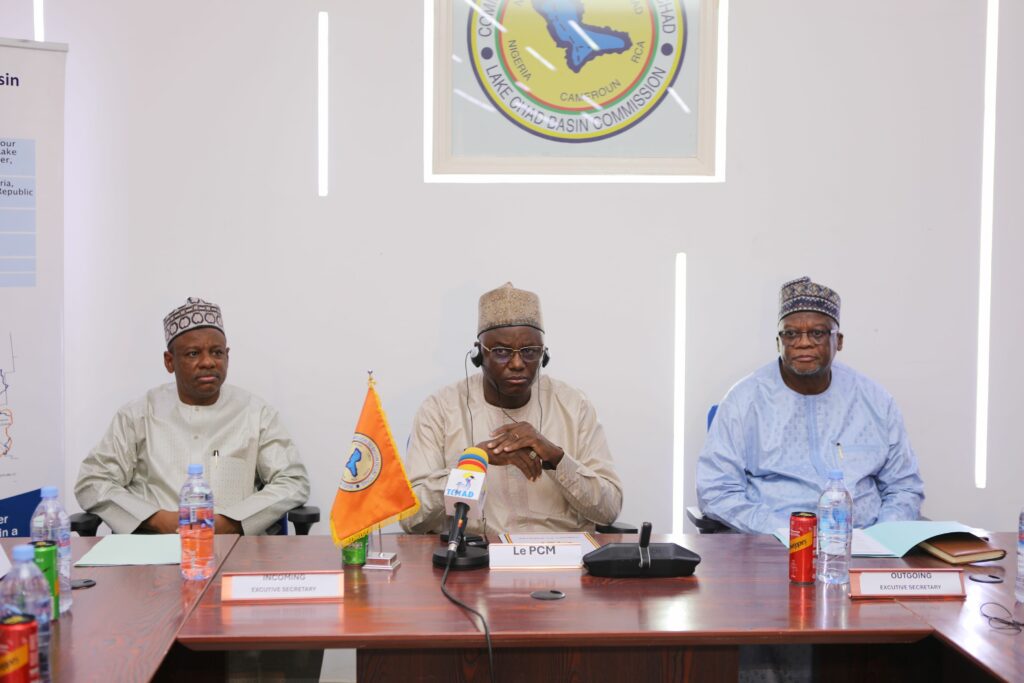
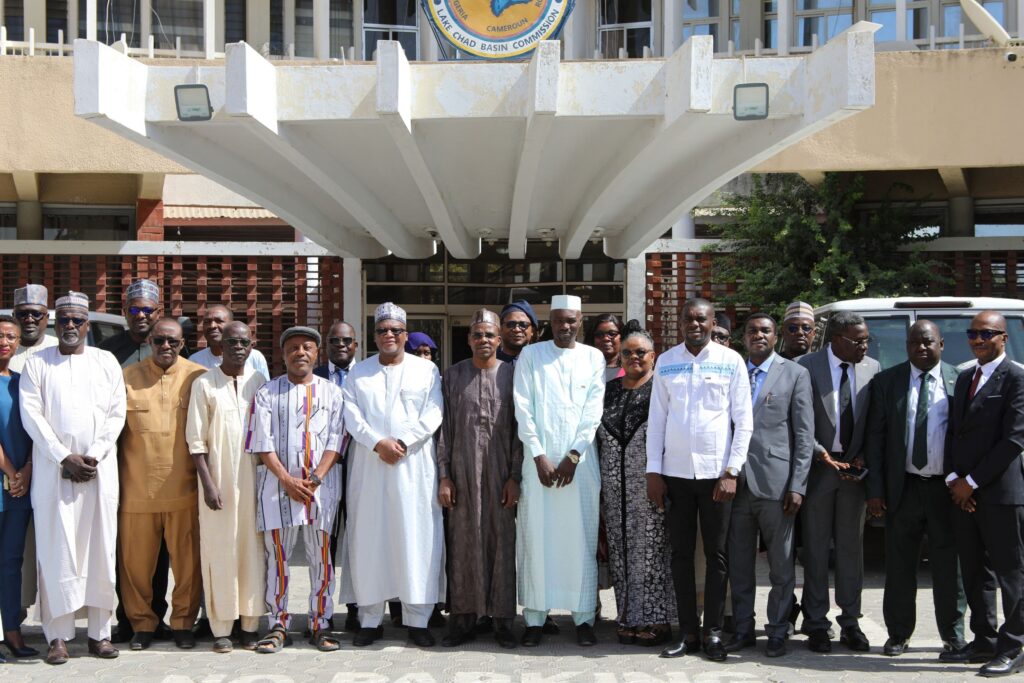
Leadership Transition at the Lake Chad Basin Commission Amb. Ibrahim Babani Assumes Office as Executive Secretary of the LCBC and Head of Mission, MNJTF Ndjamena, 16 March 2026 The Lake Chad Basin Commission (LCBC) held a formal handover ceremony marking the transition of leadership to Amb. Ibrahim Babani, who has assumed office as Executive Secretary of the LCBC and Head of Mission of the Multinational Joint Task Force (MNJTF). The ceremony was chaired by Mr. Passalé Kanabé Marcellin, Chairman of the Council of Ministers of the LCBC, and was attended by representatives of Member States, senior officials LCBC and the MNJTF, partners, and staff. In his remarks, the Chairman of the Council of Ministers commended the outgoing Executive Secretary, Amb. Mamman Nuhu, for his dedicated service and for ensuring a smooth, orderly transition that safeguards institutional continuity. He welcomed Amb. Babani, expressing the collective confidence of Member States in his experience, leadership, and vision to advance the LCBC’s strategic priorities and deepen coordination with the MNJTF. “This transition reflects our shared commitment to continuity, cooperation, and results. We appreciate Amb. Nuhu for his service and look forward to working with Amb. Babani to advance peace, security, and sustainable development in the Lake Chad Basin,”PCM, Council of Ministers Amb. Ibrahim Babani is a seasoned diplomat with dacades of distinguished service in international relations and diplomatic affairs. Since joining the Nigerian Foreign Service in 1997, he has served in various roles across Nigeria’s diplomatic and consular missions, including postings in Mali, Indonesia, and Malaysia. His extensive experience in bilateral and multilateral engagement, mediation, and development diplomacy positions him to lead the LCBC at a time when regional cooperation, climate resilience, and human security are paramount. Upon assuming office, Amb. Babani expressed gratitude to the LCBC Member States for their confidence, to Amb. Mamman Nuhu for a seamless handover, and to all partners for their continued support: “I am deeply honored by the trust placed in me by our Member States. I look forward to working closely with our regional and international partners to advance the LCBC’s core mandate particularly transboundary water resource management, livelihoods restoration, and regional stability while further strengthening MNJTF’s mission in fostering peace and security across the Lake Chad Basin.” The Commission extends profound appreciation to Amb. Mamman Nuhu for his stewardship during his tenure as Executive Secretary and Head of Mission, MNJTF. Under his leadership, the LCBC consolidated coordination among Member States, strengthened cooperation with security and development partners, and reinforced the institutional foundation for integrated basin management. His dedication to mission, people, and process has left a durable legacy for the Commission and the MNJTF. “Serving the peoples of the Lake Chad Basin has been one of the greatest honors of my career. I am grateful to the Member States, our partners, and especially the LCBC staff for their unwavering commitment to our shared objectives,”— Amb. Mamman Nuhu, outgoing Executive Secretary Looking Ahead Under Amb. Babani’s leadership, the LCBC will continue to drive evidence-based, inclusive, and results-oriented transboundary action across the Basin and strengthening of coordination mechanisms between the LCBC, MNJTF, member states and development partners. The Commission reaffirms its commitment to regional cooperation, peace, and sustainable development ensuring that the Lake Chad Basin remains a region of shared prosperity, stability, and ecological integrity.

News & Press Releases

LCBC Holds 71st Ordinary Session of the Council of Ministers

LCBC Holds 71st Ordinary Session of the Council of Ministers N’Djamena, Chad – 6 March 2026The Lake Chad Basin Commission (LCBC) convened its 71st Ordinary Session of the Council of Ministers in N’Djamena, Chad under the distinguished chairmanship of H.E. Passalé Kanabé Marcelin, Honourable Minister of Water Resources and Energy of the Republic of Chad and current Chair of the Council of Ministers. Delegations from all Member States, technical experts, and development partners participated in the session. The Council formally adopted the 2025 Annual Activity Report of the Executive Secretariat  which highlighted the Commission’s progress in advancing regional cooperation, development projects, and stabilization efforts across the Basin. The report also noted persistent operational challenges, including financial constraints and insecurity. The Council further approved the 2026 Annual Workplan and Budget, valued at approximately 15.14 billion FCFA, reflecting the Commission’s commitment to strengthening climate resilience, ecosystem restoration, regional peace, and sustainable water resource management. In presenting the 2025 Annual Report, the Executive Secretary Amb. Mamman NUHU provided a brief overview of institutional performance, noting improvements in programme implementation, project monitoring, and international cooperation. He also underscored the need for strengthened financial contributions from Member States to ensure uninterrupted operations and effective delivery of the Commission’s mandate. This 71st Session marked the final appearance of Amb. Mamman Nuhu as Executive Secretary, concluding eight years of impactful service. The Council commended his leadership and approved the nomination of Amb. Ibrahim Babani as the new Executive Secretary, ensuring continuity and stability in the Commission’s executive management. Reflecting on his tenure, Amb. Nuhu expressed heartfelt appreciation to Member States, partners, and staff: “Serving as Executive Secretary of the Lake Chad Basin Commission and Head of Mission of the MNJTF has been a great honour. I leave office with immense pride in what we have accomplished together, and with abiding faith in the future of our region. May the Lake Chad Basin Commission continue to grow in strength, relevance, and impact.”Amb. Mamman Nuhu, Executive Secretary, LCBC / Head of Mission, MNJTF. The Council reaffirmed its commitment to supporting the Commission’s programmes and priorities for 2026. With the adoption of key strategic documents and a smooth leadership transition, the LCBC is well positioned to deepen regional cooperation and enhance sustainable development, peace, and resilience across the Lake Chad Basin.

News & Press Releases

Committee of National Experts Commences 3‑Day Preparatory Meeting Ahead of the 71st Ordinary Session of the Council of Ministers

Committee of National Experts Commences 3‑Day Preparatory Meeting Ahead of the 71st Ordinary Session of the Council of Ministers N’Djamena, Chad – 3 March 2026The Committee of National Experts of the Lake Chad Basin Commission (LCBC) today commenced a three‑day technical meeting in N’Djamena as part of preparations for the upcoming 71st Ordinary Session of the Council of Ministers, scheduled for 6 March 2026. The gathering brings together National Focal Points and senior technical representatives from LCBC Member States of Cameroon, Chad, Niger, Nigeria, the Central African Republic, and Libya. The Experts are tasked with conducting an in‑depth review of strategic, administrative, financial, and programmatic documents that will guide deliberations during the Ministerial Session. In his remarks, the Executive Secretary emphasized the critical role of the Committee of National Experts in ensuring that decisions presented to ministers are well‑grounded, technically sound, and aligned with regional priorities. He also said that the Experts’ recommendations will form the backbone of discussions by the Honorable Commissioners. Over the next three days, participants will examine key documents including: The meeting highlights LCBC’s longstanding commitment to fostering collaboration among Member States in addressing the multifaceted challenges of the Lake Chad Basin, including environmental degradation, water resource management, socio‑economic development, and stabilization efforts in crisis‑affected areas. The conclusions and recommendations produced during this Expert Meeting will be submitted to the Council of Ministers during its 71st Ordinary Session on 6 March 2026, also in N’Djamena. The Ministerial Session is expected to endorse strategic decisions that will shape the Commission’s operations and regional development priorities in the year ahead. The LCBC remains committed to strengthening cooperation, enhancing regional integration, and promoting sustainable development for the over 45 million people who depend on the Lake Chad Basin for their livelihoods.

News & Press Releases

Alinea-LCBC: Visit to Canada by the Technical Director of the Lake Chad Basin Commission

Ottawa, February 4, 2026 – As part of International Development Week 2026, Mr. Hycinth Banseka, Technical Director of the Lake Chad Basin Commission (LCBC), will undertake an official visit to Canada from February 3 to 8, 2026. The mission aims to strengthen diplomatic ties and promote technical cooperation between Canada and the LCBC, in line with Canada’s Africa Strategy. Mr. Banseka will meet with representatives from Global Affairs Canada, Alinea International and numerous actors from the international cooperation community to discuss environmental, development, and security issues in the Lake Chad Basin region. “The restoration of the Lake Chad Basin is essential for community resilience and regional stability. We are proud to collaborate with Canada, Alinea, and all our partners to achieve these goals through the Lake Chad Basin Conservation Project,” said Mr. Banseka of the LCBC. A lunch-and-learn event will be held on February 4, 2026, at the University of Ottawa (Social Sciences Building), titled: “Restoring the Lake Chad Basin: Empowerment, Resilience, and Environmental Peace.” The event, held as part of the Lake Chad Basin Conservation Project, is a collaboration between Alinea International, the LCBC, and the University of Ottawa’s Centre for International Policy Studies (CIPS), with financial support from Global Affairs Canada. The program will also feature a roundtable discussion with three panelists: Yannick Beaudoin (Alinea International), Michèle Laflamme (CERFO), and Fobissie Kalame (FOKABS), along with a keynote address delivered by Mr. Banseka of the LCBC. They will exchange insights on innovative solutions for ecological restoration, strengthening climate resilience, and advancing scientific cooperation between Canada and the Lake Chad Basin countries. This visit and the exchanges it will generate will help strengthen essential partnerships for the sustainable restoration of the Lake Chad Basin and reinforce the resilience of the communities that depend on it. PCBLT | Alinea International |

News & Press Releases

Regional Workshop on Community-Based Reconciliation andReintegration Opens in Abuja

Abuja, Nigeria – October 15, 2025 — A regional training workshop on Community-Based Reconciliation and Reintegration (CBRR) has officially opened in Abuja, bringing together key stakeholders (national institutions in charge ofDDR, governor’s offices affected by the Boko Haram crisis, civil society organizations, international partners) involved in the process of reconciliation and reintegration in the Lake Chad Basin Region. The objective is to strengthencapacity and harmonize understanding of the newly endorsed Community-Based Reconciliation and Reintegration (CBRR) Policy. Organized by the Lake Chad Basin Commission (LCBC) in collaboration with the United Nations Development Programme (UNDP) and the Folke Bernadotte Academy (FBA) – the Swedish government agency for peace, security anddevelopment, the three-day workshop marks a significant step in advancing inclusive peacebuilding and recovery efforts in communities affected by the Boko Haram crisis.The CBRR Policy, adopted by LCBC member states in February 2025, is a cornerstone of the adjusted Regional Strategy for Stabilization, Recovery and Resilience of Boko Haram affected areas in the Lake Chad Basin (RS SRR 2.0). Itplaces communities at the heart of reconciliation and reintegration processes, promoting inclusive governance through the establishment of community committees and Territorial Action Plans. In his opening remarks, Ambassador Mamman Nuhu, Executive Secretary of the LCBC, emphasized the importance of the workshop in addressing the human dimension of the crisis: “This workshop is not just a technical gathering—it is a platform for dialogue, reflection, and action. By strengthening our collective capacity to implement the CBRR Policy, we are laying the foundation for reconciliation processes rooted in community realities and aspirations.”The workshop agenda includes sessions focusing on linkages between RS SRR 2.0 and the CBRR Policy, conflict-sensitive and gender-responsive analysis, joint assessments, governance arrangements, and the development of Territorial Action Plans (TAPs). These components are designed to ensure that reconciliation efforts are inclusive, locally driven, and sustainable. Speaking on behalf of the United Nations Development Programme, the Deputy Resident Representative of UNDP Nigeria, Blessed Chirimuta highlighted UNDP’s long-standing support for the LCBC and its stabilization efforts: “The CBRR Policy emphasizes locally driven peacebuilding. UNDP is proud to support this process, which empowers communities to lead reconciliation efforts and ensures that interventions are aligned with their needs and aspirations.” The Folke Bernadotte Academy (FBA), representing the Swedish government, is continuing to strengthen its operational collaboration with the LCBC through this workshop. Mimmi Söderberg Kovacs, Senior Advisor on Peace Processes and Armed Groups at FBA, shared: “We believe in the power of inclusive dialogue and community engagement. This workshop is an opportunity to build capacity, share experiences, and foster regional solidarity for a safer and more resilient Lake Chad Basin.” The workshop is expected to result in strengthened partnerships, enhanced technical capacity, and a shared roadmap for implementing the CBRR Policy across the region. For More information contact:▪ LCBC: Fajong Joseph Lereh, Communication Specialist, RS SRR. Email:j.fajong@cblt.org▪ UNDP: Sarah Zingg, Programme Specialist, UNDP Regional Hub for Westand Central Africa, Email: sarah.zingg@undp.org▪ FBA: Mimmi Söderberg Kovacs, Senior Advisor on Peace Processes andArmed Groups, Email: Mimmi.SoderbergKovacs@fba.s

Scroll to Top